Two samples arrive in the same gift box. Same silhouette, same mirror finish, both described as “metal”. One is a Zamak 3 die casting; the other is a 0.6 mm 304 pressing with a welded handle. The quotes sit 30–40% apart, and the buyer is told only that one of them is “better”.
It is not a good-metal-versus-bad-metal story. It is two processes that look identical once plated — and once you know which one is in the box, both the price and the weight in the hand stop being a mystery.
Zinc alloy (Zamak 3, ASTM B86) is about 96% zinc, 3.8–4.2% aluminium and a trace of magnesium, and it melts at 381–387 °C. That low melting point is the whole point: it is injected into a steel die and comes out finished in one cycle — bowl, handle, rim and lettering in the same shot.
201 and 304 arrive as cold-rolled sheet 0.4–0.8 mm thick and are blanked, pressed and drawn. If the shape needs a separate handle, that handle is welded on, ground back and re-polished by hand.
Zinc is cast. Stainless is formed. Every difference below follows from that one line — the weight, the detail, the price.
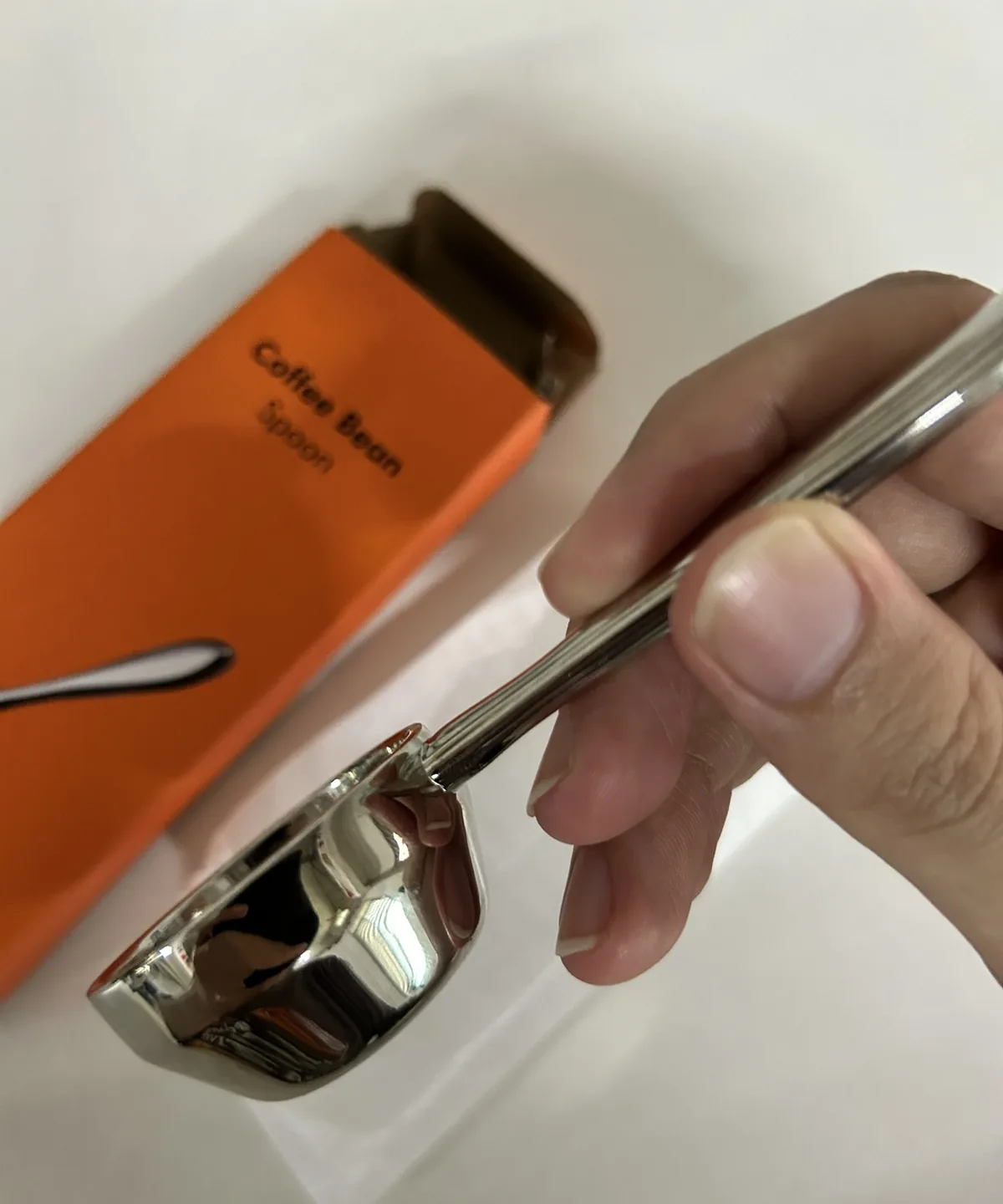
A 0.6 mm pressing has to be thin everywhere, so it reads light in the hand and rings hollow when you tap it. A casting puts metal where the hand actually feels it — a heavier bowl, a thicker butt to the handle — while the interior stays a 1.5–2.5 mm skin over a cored void. That is why a 45 g casting and a 45 g pressing do not feel like the same 45 g.
It also buys detail a press cannot. A recessed monogram, a beaded edge, a rim that reads as rolled, a handle that flows into the bowl with no joint — all of it comes out of the die at no cost per piece. On stainless, each of those is a stamping tool plus a second operation.
And there is no seam. A stamped scoop has a joint that is welded, ground and polished, which is exactly where residue collects and where plating fails first.
Side by side, the whole difference reads in a dozen lines:
| Zinc alloy (Zamak 3) | 304 stainless | |
|---|---|---|
| Density | 6.6 g/cm³ | 7.93 g/cm³ |
| Hardness | 82 HB | ≤201 HB |
| Typical wall | 1.2–2.5 mm, cast | 0.5–0.8 mm, sheet |
| How the part is made | one die-casting cycle | blank, press, draw, weld, polish |
| Finish | polished, then nickel–chrome plated | polished or brushed, no plating |
| Metal price, China, Nov 2026 | about CNY 26,000/t — 1.9× 304 | CNY 13,950/t cold-rolled |
| Cost per finished part, 1,000–2,000 pcs | 30–40% lower | baseline |
| Tooling before the first part | one die, USD 3,000–20,000 | a press tool per forming step |
| Corrosion, dry indoor use | stable; white rust only if left damp | will not rust; tea and salt stains |
| Dishwasher | never | yes |
| Food contact | dry goods only — no acid, no free water | all foods |
Per kilo, zinc is not the cheap metal. China spot in November 2026: Zamak 3 around CNY 26,000 a tonne, 304 cold-rolled CNY 13,950 — roughly 1.9× 304 by weight, and about 3× the price of 201. Anyone quoting zinc as the budget option is reading a 1990s price list.
Per finished part, the picture reverses — and that is the number on your purchase order. One casting replaces a blanking tool, two press steps, a weld, a grind and a polish. On a 1,000–2,000 piece gift-box run the same silhouette lands 30–40% cheaper in zinc, not because the metal is cheaper but because the labour and the tooling are.
The die is the entry ticket: USD 3,000–20,000. Below roughly 2,000 pieces, stainless can still win on total cost, so ask for both quotes before the drawing is frozen.
Dishwasher: no. A domestic cycle is detergent at pH 10–12, 55–70 °C, and a stainless rack to sit against — alkali, heat and a galvanic couple at once. It strips the plating, then white rust, then a part that pits and turns brittle. Wipe it or hand-wash it and dry it immediately.
Food contact: dry yes, wet no. Whole beans, leaf tea, whole spice and sugar mean seconds of contact and no free water. Sauce, citrus, vinegar, brine and honey are a different question: they dissolve the surface and leave a metallic taste. The International Zinc Association draws the same line — as-cast zinc should not meet acid food “unless they may be expected to remain dry”. If the part touches food, ask for the paper rather than the adjective: a food-contact declaration under EU 1935/2004 plus a migration report to the Council of Europe metals guide.
The sets where a cast scoop feels right share three properties: the contents are whole rather than powdered, dry with no free water in the pack, and they leave no film that has to be washed off afterwards.
What disqualifies a pack is just as consistent. Powders are not corrosive in themselves, but oils and fines pack into plating pores and the only thing that removes them is a wash. Anything wet attacks the zinc directly. Sticky dried fruit such as cranberry, mango or longan puts sugar, acid and residual moisture in one lump — the worst combination a plated surface can meet.
If the gift set holds honey, a sauce, a ground blend or sticky fruit, this is the wrong part. We would rather quote a 304 scoop than sell you this one.
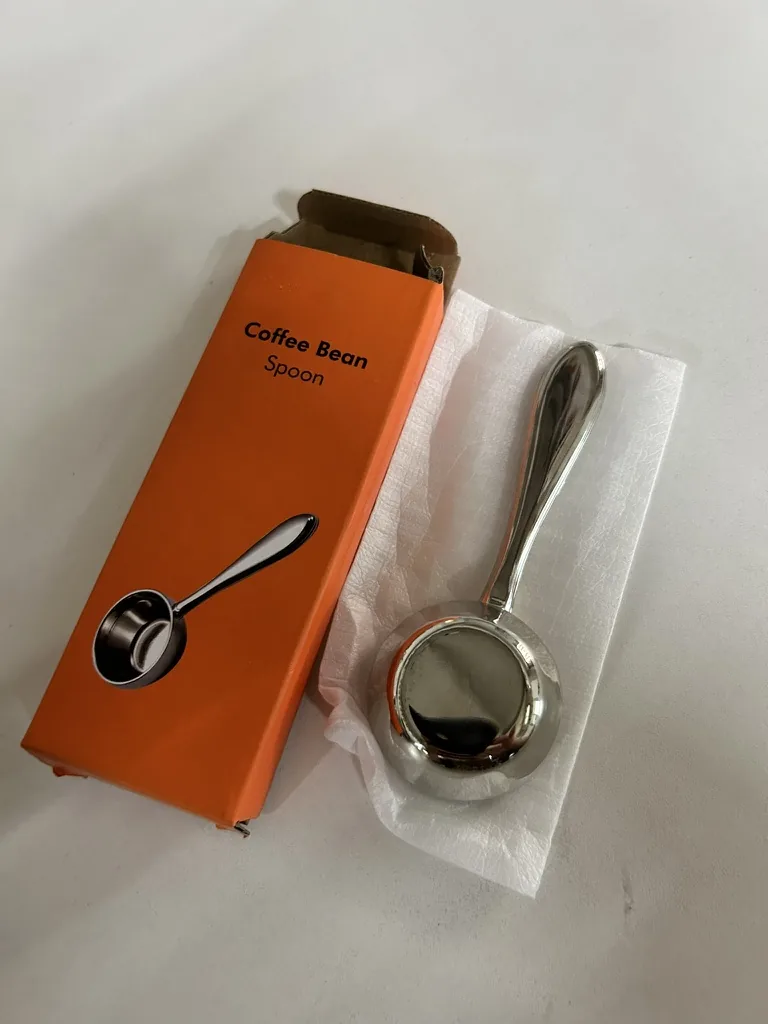
Which brings us to the part we actually make. The zinc alloy coffee scoop is a 45 g Zamak 3 die casting — 4.3 cm bowl, 11.8 cm long, mirror-polished, handle ready for laser engraving, packed in a printed colour box. It is what a coffee roaster or a tea brand drops into a gift set to make it feel considered rather than free: heavy enough to read as premium in the hand, priced below the 304 equivalent at promotional volumes, and available from 200 pieces at USD 2.20 each, EXW Jieyang.
Because it is cast rather than stamped, the same die can carry your mark recessed into the handle, a beaded rim or a rope edge without a second tooling charge. And the care card that ships with it says what this article says: dry goods only, wipe or hand-wash and dry at once, never the dishwasher.
 View the product →
 View the product →
The part this article is about
45 g Zamak 3 die casting, 4.3 cm bowl, mirror-polished, handle ready for laser engraving, packed in a printed colour box. The only zinc alloy piece we make.
No. Detergent at pH 10–12 and 55–70 °C strips the plating, and the stainless rack speeds it up as a galvanic couple. Wipe it or hand-wash it, then dry immediately; a daily dishwasher will blister the finish within a few cycles.
Per kilo, no — Zamak 3 ran about 1.9× 304 in November 2026. Per finished part at gift-box volumes, usually yes: one casting replaces several press steps, a weld and a polish, so the same silhouette often quotes 30–40% lower.
Mass sits where the hand feels it — a thicker bowl and handle butt over a cored interior — instead of being equally thin everywhere. Zinc is also 17% less dense than steel, so the same geometry starts lighter and the casting just puts that weight back where it reads.
Send us the product, the quantity and the market and we reply within 24 hours with pricing, sampling and a realistic production schedule. Request a quote or WhatsApp us.
