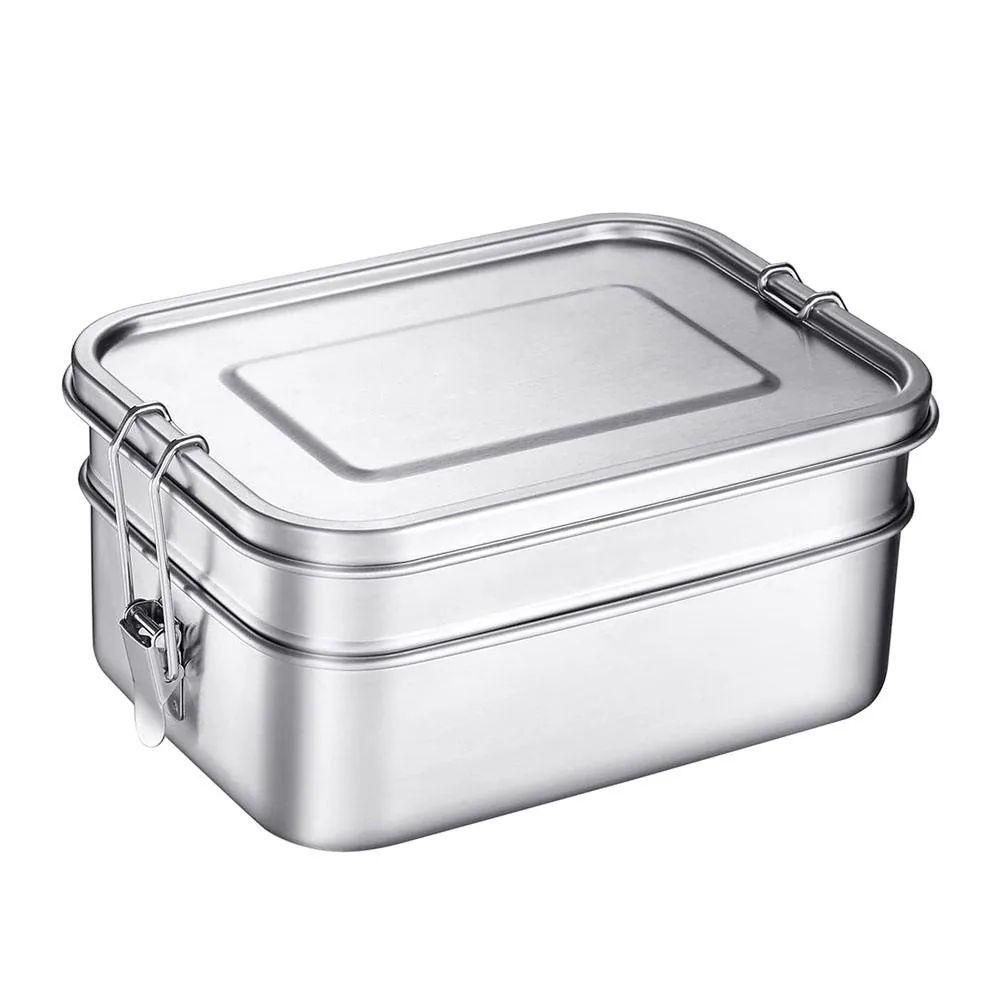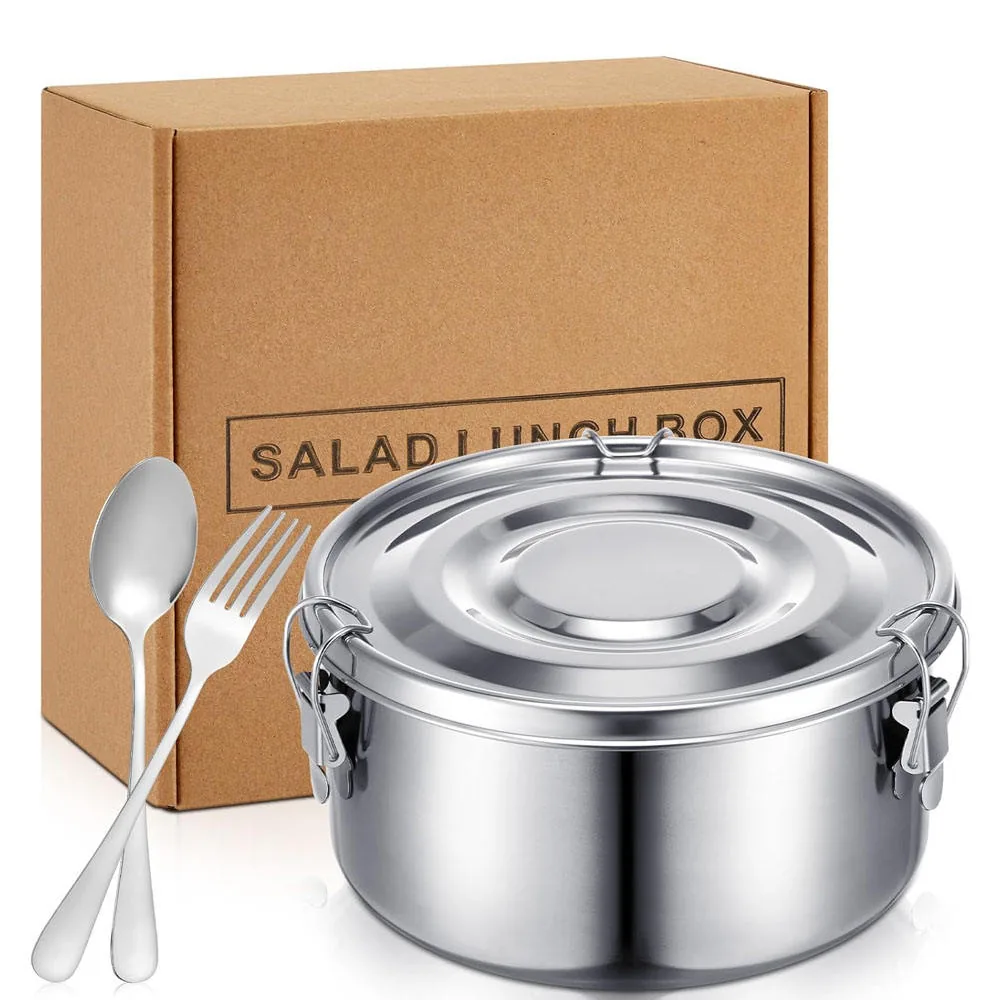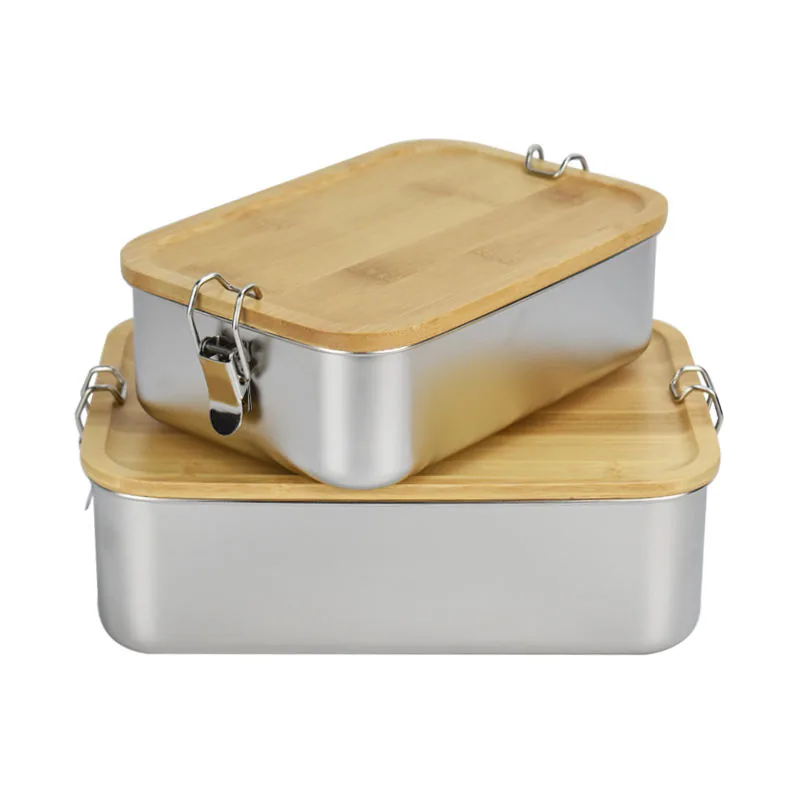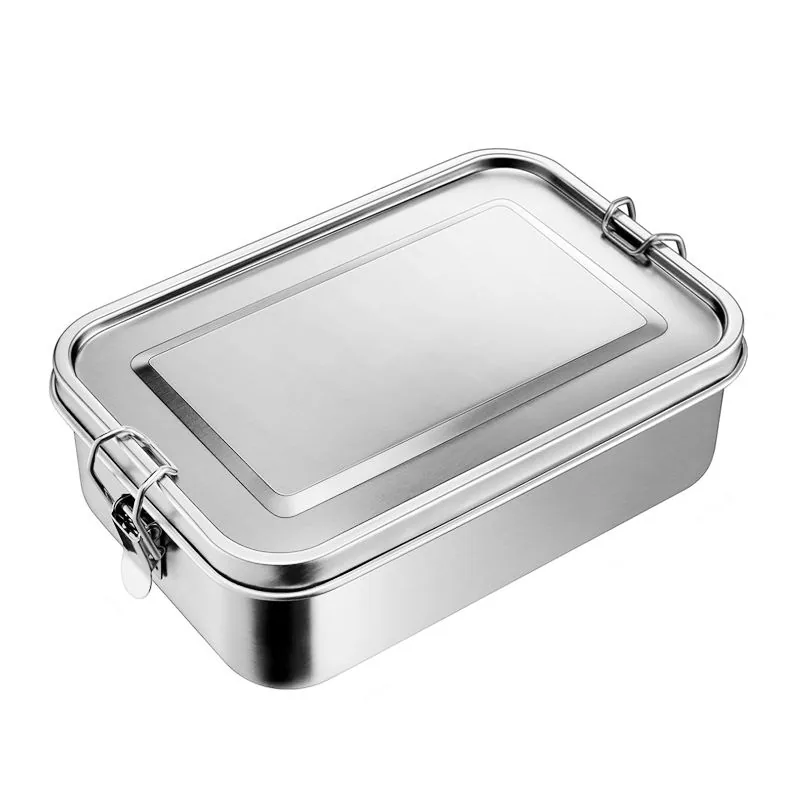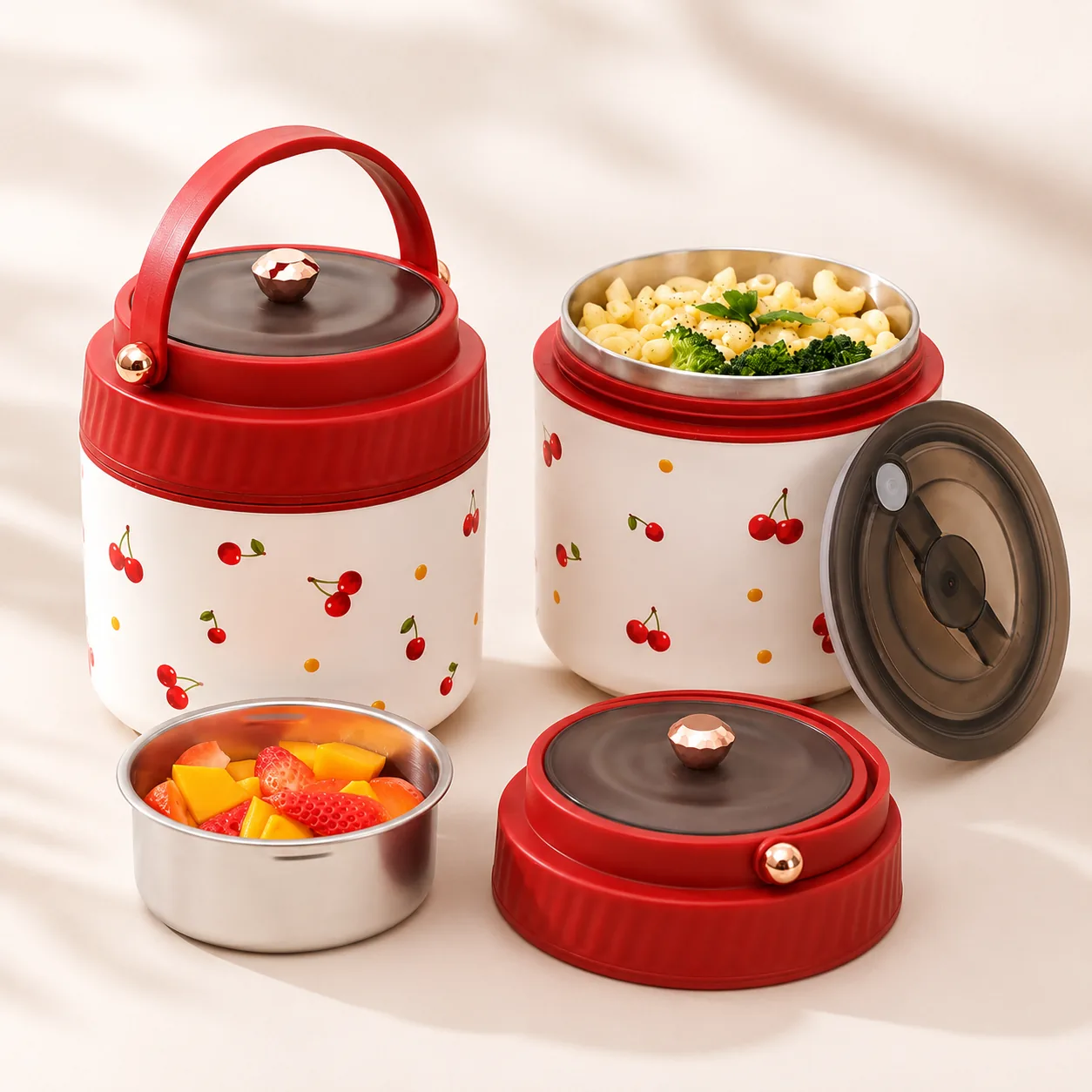
A 1200 ml insulated lunch box in 304 stainless with two stackable inner bowls, a screw-down leak-proof lid and a printed fabric carry bag — a hot lunch that survives the commute and the desk day. The bowls that touch food are 304 throughout, marked on the inside of the bowl. BPA-free, with FDA and LFGB food-contact reports on request; the bag and lid take custom print for corporate gifting and retail.
MOQ is per SKU — sizes, colours, materials and packaging can be combined in one order, but each SKU must reach its own MOQ.
| Item | Price |
|---|---|
| 1200 ml box + utensils | $6.90 |
| 1200 ml box + utensils + insulated bag | $9.00 |
| Item | Size | Weight |
|---|---|---|
| 1200 ml box + utensils | 15.5 × 13 × 21 cm | 1300 g |
| 1200 ml box + utensils + insulated bag | 15.5 × 13 × 21 cm | 1600 g |
Need the full spec sheet? Email us and we'll send the PDF with MOQ, lead time and certification.
| MOQ | 50 pcs per SKU |
|---|---|
| Material | Stainless steel (304) bowls, insulated body |
| Surface finish | Mirror polish / satin brush / electroplated colour (per request) |
| Packaging | Bulk / colour box / custom gift box with your logo |
| Customisation | Laser engraving / silk-screen printing / sticker label |
Capacity on a lunch box is measured to the rim, not to the fill line, and buyers find that out when the first container comes back with soup on the lid. This set is rated 1200 ml across two stainless bowls that stack inside the insulated body: a deep one for rice, pasta or stew, and a smaller one that sits on top for fruit, salad or a side.
The stacking matters more than the total. One deep 1200 ml well means a salad and a hot dish share the same space and the same temperature. Two bowls let cold and hot travel together, and both lift out, so the outer body stays on the desk as a bowl.
Every insulated box claims leakproof. The difference is what the seal is held against, and a box that carries soup is a harder test than one that carries a sandwich.
Three things decide whether it holds. The seal geometry — this box closes on a screw collar that presses a silicone gasket flat against the rim, which holds under pressure in a way a push-fit lid with a thin O-ring does not. The trade-off is that it takes two hands to open. The lid has to survive cooling — food sealed at 90 °C pulls a vacuum as it drops, and a lid without a vent gets hard to open by lunchtime; the knob on this lid is what your fingers turn when it does. Nothing outside can trap liquid — the joint between the insulated body and the base is where a commute and a dishwasher both attack, so it is pressed rather than seamed with a lip.
Ask any supplier what the box was tested with. A box tested empty tells you nothing; a box filled with soup and laid on its side for a shift tells you what you are buying.
The bowls that touch food are 304, stamped on the inside of the bowl in our photographs. 316 is the grade buyers ask about next: it adds molybdenum, which resists chloride — salt, soy, tomato, pickle — for longer. If your programme is built around salty or tomato-heavy menus, say so before we quote. The grade belongs on the purchase order, not in a marketing line.
What neither grade can do is go in a microwave. Steel reflects microwaves, and a metal box in a microwave arcs and damages the appliance. Buyers building a "reheat at the office" proposition need to hear that before they order, not after. If your market expects reheating, the inner bowls have to be a microwave-safe material and this is not that product.
It is dishwasher safe. The printed outer body is the part that ages first, so hand washing keeps it looking new for longer.
Corporate gifting and staff rewards. The bag and the lid both take a logo, so a company can hand out something that looks like a gift rather than a canteen item. The 50-piece minimum is what makes this possible — a firm can order fifty without committing to a container.
Retail and private label. The printed bag is the part that stays visible on a shelf, which is why it is worth the extra $2.10 rather than a way to save it.
Not a children's box. The screw collar needs two hands and a firm turn, so school programmes are better served by a clip-lid box. Saying so here saves a sample round.
| Box + utensils | 1200 ml · 15.5 × 13 × 21 cm · 1,300 g · MOQ 50 · $6.90 |
|---|---|
| Box + utensils + insulated bag | 1200 ml · same box · 1,600 g · MOQ 50 · $9.00 |
| Insulated bag on its own | Ø15.5 × 25 cm, drawstring top |
| Carton count, carton size | Quoted with the order — they differ between the bag and no-bag versions |
| 20GP / 40HQ | Quoted with the order, sized to the route |
Most of what we ship goes to importers, meal-prep brands and housewares distributors rather than to single buyers. If you are sourcing a rectangular lunch box wholesale, the deciding questions are usually three: how many sets fit a carton, what the carton weighs, and whether the lid still seals after a month of stacking. We answer all three in the quotation — carton count, gross weight and a sample you can test.
This is a 1200 ml rectangular lunch box with rounded corners, so it sits flat in a tote and stacks without rocking on a shelf.
We are the manufacturer rather than a trading company: the body is stamped, welded and polished in our own workshop in Jieyang, and the printed fabric bag is made by the bag factory we hold a stake in. If you need a supplier who holds the same tolerance across repeat orders, start with a sample and check the lid yourself.
The bag adds 300 g and $2.10. Orders that skip it almost always come back for it on the second run, because the bag is what turns a container into a gift.
Laser engraving on the lid is permanent, does not wear off in a dishwasher, and sits flat so the boxes still stack. Silk-screen on the bag is where colour lives: full-colour print on fabric is what carries a brand mark at retail.
Sticker labels are the cheap option, and we advise against them above 200 units. A label on a box that gets washed daily lifts at the corner within months, and a peeling logo is worse than no logo.
No. Steel reflects microwaves and arcs inside the appliance. If your market expects reheating, ask us for a box with microwave-safe inner containers instead.
Yes — that is what the screw collar and the flat silicone gasket are for. Fill to the line rather than the rim, and close it after the food has stopped steaming, so the lid does not pull a hard vacuum.
Yes. The print sits on the fabric rather than on a sticker, so it survives daily use. Send artwork and we confirm a printed sample before the bulk run.
50 pcs per SKU. The bag and no-bag versions are separate SKUs, and each has to reach its own 50.